|
El
Día de San Judas Tadeo |
||
|
For a better understanding of this story, please read La Reliquia first.
Here in Lerdo the
celebration of St Jude begins a week before the official day, 28
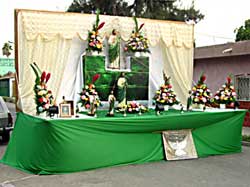
October. Several neighborhoods erect large altars which will block the
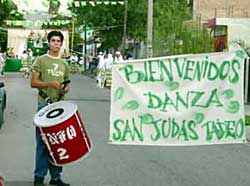
street. The street in front of an altar becomes a stage where dance teams (danzas) will perform. The
number and location of altars are limited by the city to avoid complete
traffic disruption. Each
neighborhood with an altar will also have a danza. Other
neighborhoods without an altar may have a danza that visits various
altars as guest dancers. |
||
 |
While this story focuses on the St Jude's Day activities, the major purpose of the danzas is to perform for the celebration of the Virgin of Guadalupe each year for two weeks preceding the 12th of December. For the Virgin, the groups will be larger and the dance much more elaborate than for St Jude. |
 |
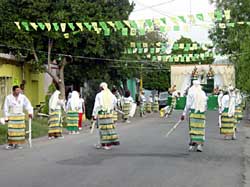 |
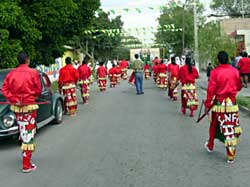
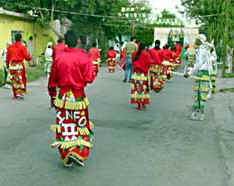
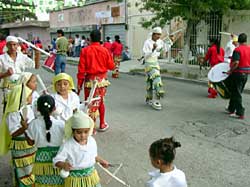
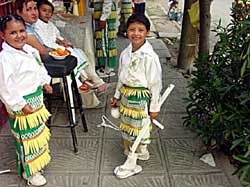
The home danza completes it's hour-long performance before the altar as the visiting danza gathers down the street. Note the matching colors of the costumes of the danza, the altar and the banners. |
 |
 |
 |
 |
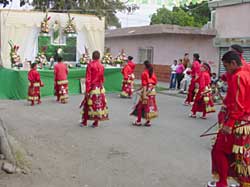 |
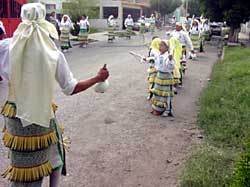
The Espíritu Santo arrives, and the two teams dance their way through a carefully choreographed stage exchange. Now the guest team begins their hour of dance before the altar and an audience of neighbors lining the sidewalks. |
 |
 |
||
 |
 |
 |
|
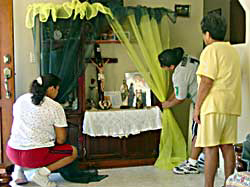
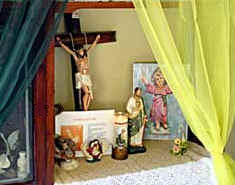
It's 28 October, the final day of the week of celebration of San Judas Tadeo. In Doña Martha's living room, the TV has been moved out of the entrainment cabinet to make room for an altar which will the focal point for the final night. |
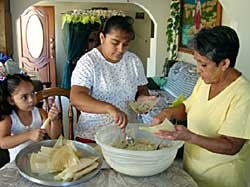
Andrea is helping her mother and grandmother prepare sweet tamales for tonight's neighborhood meeting. |
|
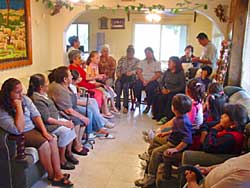 |
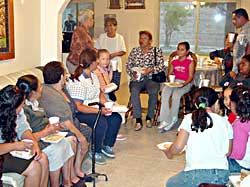
In the
evening, a group of neighbors gathered in Doña Martha's house for a misa
para San Judas Tadeo followed by tamales and fruit punch. |
 |
|
Now there are only three days to get ready for El Día de Muertos -- the Day of the Dead. There are so many holidays and celebrations in Mexico! |
||
| Continue on to The Feast of Our Lady of Guadalupe | ||
| Page Directory | ||